Showing posts with label fantasy. Show all posts

Tuesday, 1 July 2014

How to Train Your Dragon 2 - Review

Director: Dean DeBlois Writer: Dean DeBlois Studios: DreamWorks Animation, 20th Century Fox Cast: Jay Baruchel, Cate Blanchett, Gerard Butler, Craig Ferguson, America Ferrera, Jonah Hill, Christopher Mintz-Plasse, T.J. Miller, Kristen Wiig, Djimon Hounsou, Kit Harrington Release Date (UK): 27 June, 2014 Certificate: PG Runtime: 102 min

DreamWorks’ gorgeously animated follow-up to their 2010 hit “How to Train Your Dragon” is a soaring success, a sequel which provides the same level of high-flying spectacle, rib-tickling humour and heartfelt poignancy as its marvellous predecessor while taking us on a new and exciting adventure through its mythical land. Of course, with the once-feared dragon community now trained and fully integrated into everyday Viking life, that fantasy world has gotten a whole lot bigger since last we saw it. Riding on the backs of its titular winged beasts, “How to Train Your Dragon 2” further explores the isles surrounding the village of Berk, and in doing so, widens the scope of its fantasy world, expands on the mythos behind its dragon species and throws new, intriguing characters into the mix. Though to give away too many details would be to spoil some of the surprises in store for one-legged hero Hiccup (voiced by Jay Baruchel) and his dragon companion Toothless.

They’re a delightful pairing, our two intrepid heroes: Hiccup, the awkward outcast turned plucky and adventurous dragon rider, and Toothless, a handsome Night Fury who’s adorably goofy but also brave and unwaveringly devoted to his human friend and master. Together, they share a loyal bond that’s sweet and endearing, and watching them talk, play and ride through the clouds together is a real joy. In “How to Train Your Dragon 2,” they face a powerful threat, a fearsome “dragon master” with the formidable name of Drago Bludvist (Djimon Hounsou). He’s assembling his own dragon army with the aim of conquering all who oppose him. While searching for new land, Hiccup and Toothless stumble upon his plans for domination and band together with the villagers of Berk to put a stop to his evil ways.

As per the rule of the sequel, “How to Train Your Dragon 2” is bigger than its predecessor: it features, for example, gargantuan, ice-spitting super-dragons so phenomenally huge they’d pick up Gareth Edwards’ Godzilla and gobble him up for breakfast. But as he did with the first film, director Dean DeBlois keeps the breath-catching spectacle grounded in the emotions of his characters, whose relationships he maintains a firm grip on. Hiccup and his remarkably burly father, the fearless warrior Stoick the Vast (Gerard Butler), again make a fully believable father-son duo, butting heads in the previous movie but brought closer now that Stoick's not all stabby-stabby kill-kill towards dragonkind (he's actually quite enthusiastic about them now -- he even has them race each other!). And there’s some seriously touching stuff in here, surprisingly so for a film aimed primarily at the younger crowd -- it's great to see an animated movie willing to enter really intimate and emotional territory. On two occasions I actually found myself teary eyed: I won’t spoil anything, but there’s a reunion in the film that’s beautifully handled and is one of the most moving things I’ve ever seen in an animated movie -- or, heck, any movie.

And all the way through, DeBlois impressively maintains the first film’s enchanting sense of wonder: John Powell’s score is again a spellbinding treat, and the scenes of Hiccup and Toothless soaring through the skies together have a real graceful beauty to them. The great Roger Deakins is credited as having been a visual consultant on the film; looking at the results, that’s not surprising in the slightest. DreamWorks have shown a knack for sequels over the years, with “Shrek 2” witty and hilarious, “Kung Fu Panda 2” exhilarating fun and “Madagascar 3” pleasingly brisk. Now in swoops “How to Train Your Dragon 2,” the best of the lot: emotionally resonant, properly thrilling and just plain flamin’ gorgeous, it's a triumph in family entertainment, just like its predecessor was. The question remains, however, as to why all the adults in this mythical world speak with a thick Scottish brogue while all the youngsters speak with squeaky clean American accents. Then again, one is very likely to become too swept up in the magic and majesty of the film to dwell on such silly nitpicks.

Rating: 9/10

Tuesday, 3 June 2014

Maleficent - Review

Director: Robert Stromberg Writer: Linda Woolverton Studios: Walt Disney Pictures, Walt Disney Studios Motion Pictures, Roth Films Cast: Angelina Jolie, Sharlto Copley, Elle Fanning, Sam Riley, Imelda Staunton, Juno Temple, Lesley Manville Release Date (UK): May 28, 2014 Certificate: PG Runtime: 97 min

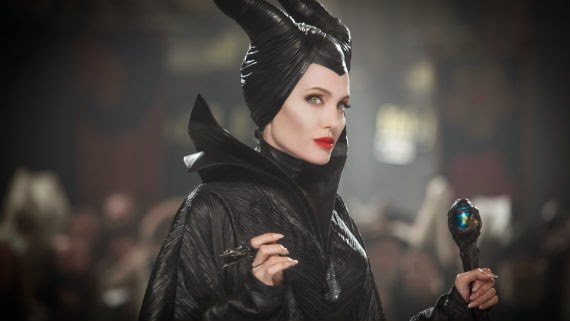
So enormously watchable is Angelina Jolie in Disney’s “Maleficent” that one is awfully tempted to pardon the film for its myriad storytelling hiccups based solely on her lead performance. As the iconic villainess who in the classic 1959 animation cursed Sleeping Beauty into an endless slumber, Jolie is magnificent: lavishly wicked, devilishly elegant and with a fiery glare that could turn any man to pure stone, her performance is dead-on, so much so that one suspects she might have actually been born to play the role -- watching her glower and prowl about in her extravagant costume is like watching Maleficent herself step out from her animation cels into our reality. Jolie also reminds us why she became such a superstar in the first place: though she’s often dismissed as nothing but a tabloid beauty, people forget that she truly is a terrifically talented actress with real screen presence, and that taking your eyes off her is a tough ask -- especially when she has thick, twisting horns growing from her crown and pointed cheekbones that could sharpen an HB pencil.

So it’s a damn shame that the rest of Disney’s live-action fairy tale reimagining, which shines its titular Mistress of All Evil in a new and more sympathetic light, does her performance little justice. Somewhere in here there’s a dark and intimate character study ready to burst out and spread its wings; sadly, its wings are clipped by rushed storytelling which races through Maleficent’s untold tale, skipping over character beats in favour of pretty CG visuals. Her transformation from angelic innocent to vengeful villain to loving mother is rendered rather limp and could have benefited from a longer, more fleshed out runtime (at 97 minutes it’s one of the shortest blockbusters of recent years). We can put this down to the inexperience of first-time director Robert Stromberg: previously a production designer on “Avatar” and “Alice in Wonderland,” Stromberg crams the screen full of colourful fantasy landscapes and magical creatures, and somewhere along the line, Maleficent’s story gets lost in the spectacle -- that the bogstandard fairy tale setting feels largely artificial doesn’t do well to help matters either.

The film does have an admirable revisionist feminist streak akin to last year’s “Frozen,” with a rape-revenge plot tied in with Maleficent’s tragic backstory (an early moment of surprising bleakness the film never quite recaptures) and the “true love’s kiss” cliche given a neat spin. Along with that, it’s easy to see what it was about the project that appealed so much to Jolie: as Maleficent grows close to the growing Aurora, aka Sleeping Beauty (the talented Elle Fanning, sadly given nothing to do), the film delves into themes of adoptive parenting and maternal love, which the three-time adopter ought to know a little something about. But the execution lacks true enchantment and for a film called “Maleficent,” it disappointingly only scratches the surface of its anti-heroine’s intriguing psyche. Jolie is a joy to watch, her performance a darkly exquisite, ferocious treat; trouble is, whenever she prowls off-screen, you find yourself willing her to prowl straight back.

Rating: 5/10

Saturday, 26 April 2014

The Amazing Spider-Man 2 - Review

Director: Marc Webb Writers: Alex Kurtzman, Roberto Orci, Jeff Pinkner Studios: Columbia Pictures, Marvel Entertainment Cast: Andrew Garfield, Emma Stone, Jamie Foxx, Dane DeHaan, Colm Feore, Felicity Jones, Campbell Scott, Emberth Davidt, Paul Giamatti, Sally Field Release Date (UK): April 16, 2014 Certificate: 12A Runtime: 142 min

Without doubt, the absolute best thing about Sony’s 2012 “Spider-Man” reboot was the pitch-perfect casting of Andrew Garfield and Emma Stone. As Peter Parker and Gwen Stacy, the costumed webhead and his brainbox lover, Garfield and Stone are an endlessly watchable delight, bursting with personality, flaunting a warm passion and sharing a buzzing chemistry which for electrical surges rivals Electro himself. So it was with a great deal of joy that I discovered while watching “The Amazing Spider-Man 2” that despite the marketing’s overwhelming showcases of special effects action and comic book villainy, director Marc Webb had decided to make Peter and Gwen’s relationship the focus of the film — a relief, considering my worries that the story was to be a cluttered, unfocused mess.

As you may recall, at the end of the first "Amazing Spider-Man," Peter broke a promise: he swore to the late Captain Stacy that he would leave Stacy's daughter alone and thus keep her safe from Spider-Man's enemies. Now Peter's having to deal with the consequences of breaking that promise: haunted by guilt, he's seeing Stacy everywhere, and it's put a strain on his and Gwen's relationship. This is what drives the drama of the film: Peter loves Gwen and wants to be with her, and she too wants to be with him, but at the same time he wishes to keep her from harm. Peter and Gwen's relationship is the core - or the heart, if you will - of the story around which everything else revolves, and it's what keeps the film from being that cluttered, unfocused mess I worried it would be.

To that effect, it's ultimately what keeps “The Amazing Spider-Man 2” from being another “Spider-Man 3.” Like Sam Raimi’s much-derided threequel, Webb’s second Spidey outing has the infamously worrying count of three villains, these being Jamie Foxx’s electrically charged Electro, Dane DeHaan’s cackling Green Goblin, and Paul Giamatti’s roaring Russian mobster Rhino. Many internet commenters feared that this was once again too much, that the film would be crushed under the weight of its villains; as Scotty from “Star Trek” would proclaim, “She cannae take anymore, captain!” But if anything, it proves that the problem with “Spider-Man 3” was not, as is so frequently claimed, the number of villains, it was the lack of focus. Raimi didn’t find a focus to his story and the result was a cluttered muddle; Webb does, and he finds it in the romance between Peter and Gwen, who through being in the spotlight give the drama and the story a focal point and a driving force.

Which is not to say that the story’s structure is not a little unwieldy: alongside Peter and Gwen there is an awful lot going on, with the rise of Electro and the Green Goblin both requiring lengthy set-ups and the mystery behind Peter’s parents finally being solved. And which is not to say that the balance is perfect: following his transformation and a brief scuffle with Spidey at Times Square, Electro is disappointingly missing from action until the big finale, for example. But in juggling many balls, Webb impressively drops very few; certainly less so than he did in the first “Amazing Spider-Man,” where Peter’s intriguing pursuit of the truth behind his parents’ death was glaringly forgotten in the film’s second half. Considering all the sub-plots it’s surprisingly coherent, which I’ll put down to two things: 1. Peter and Gwen being front and centre, and 2. The sub-plots all being related to the evil entity of OsCorp, which ties them all together in a neat and sinister little bow.

I suppose it also helps that the film as a whole is fantastic fun and that it zips along with a bouncy energy. The sights of Spidey gliding and web-swinging between the skyscrapers of New York are utterly spectacular, the splashy special effects are universally splendid, and the action, which now utilises bullet-time to incorporate our hero’s spidey-sense, is properly thrilling. But Garfield and Stone are so good together, and their chemistry so warm and engrossing, that the scenes they share are alone worth the price of admission — all that other stuff is just an extra treat. I’d also like to mention that I’ve loved this reboot’s treatment of Gwen, who at no point has been the shrieking, helpless, ever-endangered damsel in distress that Kirsten Dunst’s Mary Jane was rather embarrassingly reduced to in the previous trilogy. Smart, resourceful and bravely getting in on the action, she’s effectively Spider-Man’s sidekick, and I just love that.

Rating: 8/10

Wednesday, 9 April 2014

Noah - Review

Director: Darren Aronofsky Writers: Darren Aronofsky, Ari Handel Studios: Paramount Pictures, Regency Enterprises, Protozoa Pictures Cast: Russell Crowe, Jennifer Connelly, Ray Winstone, Emma Watson, Anthony Hopkins, Logan Lerman Release Date (UK): 4 April 2014 Certificate: 12A Runtime: 138 min

The story of Noah is a scary one: it is, after all, that of a man who sat in a boat while the world around him drowned. Darren Aronofsky recognises this, and so, in his new blockbuster movie “Noah,” there is a scene where the terrified screams from those swept away by God’s great flood cause Noah’s family distress as they sit in the safety of the ark. Why can’t they throw out ropes so that people can climb into the ark, they ask Noah. “There is no room for them,” comes his dismissive reply, though look into his eyes and you might detect that he too is troubled by the screams. I suppose it goes without saying that Aronofsky’s telling of this biblical tale is darker than your average Sunday School rendition: this is, after all, the man who gave us the uncompromisingly bleak “Requiem for a Dream,” which memorably ended with amputations and electro-shock therapy. Those scenes were tough to stomach, and so are moments in “Noah:” images of cannibalism fill the screen, newborn babies are placed in danger and one poor soul is unexpectedly trampled to death (don’t ask me how the film got away with a 12A rating). Not to mention that the apocalypse occurs, the horror of which Aronofsky fully embraces.

Noah is played by Russell Crowe, who performs him not as the smiling, rosy-cheeked hero you read about as a child but as a complex man, conflicted between his love of his family and nature and his need to serve his God. Crowe lends to Noah the gravitas deserving of a biblical figure. He also lends him a compelling determination which teeters dangerously close to obsession. And if there exists a running theme throughout Aronofsky’s films, surely it’s obsession — self-destructive obsession, to be precise. Most of Aronofsky’s characters share this trait, be they Sean Gullette’s isolated number theorist in his feature debut “Pi,” the various drug abusers in “Requiem for a Dream” or Natalie Portman’s perfectionist ballerina in “Black Swan.” Noah is no different, his obsession being to selflessly obey God, and his self-destruction coming when he finds himself willing to commit acts of monstrosity in the name of this obedience. At the film’s beginning we like Noah: we see that he is kind and loving and brave, and balanced between his devotion to God and his devotion to his family. Towards the end we’re not so sure: that balance is lost, and soon enough basic morals give way to thoughtless extremism.

Apologies if I’m making it all sound very bleak: as an epic fantasy blockbuster “Noah” actually works very well, with plenty of dazzling visual effects and spectacular apocalyptic destruction on display. Most enjoyable of the special effects are the stone giants, who are like stop-motion monsters out of a Ray Harryhausen production, and whose thrilling battle with violent tribesmen, as led by a remarkably slimy Ray Winstone, resembles the battle at Isengard between the Ents and the Orcs in “The Lord of the Rings: The Two Towers.” But I do like that there’s a grit and a darkness to this, and that at the centre of it there is a Noah who is a man, complex and conflicted. After so many rumours of studio tampering and a watering down of Aronofsky’s vision, it’s a relief that the film is as bold, fierce, thoughtful and daring as it is — though I suspect it’s less the studios and more Aronofsky we have to thank for that.

Rating: 8/10

Monday, 17 March 2014

300: Rise of an Empire - Review

Director: Noam Murro Writers: Zack Snyder, Kurt Johnstad Studios: Legendary Pictures, Cruel and Unusual Films Cast: Sullivan Stapleton, Eva Green, Lena Headey, Hans Matheson, Rodrigo Santoro Release Date (UK): 7 March 2014 Certificate: 15 Runtime: 102 min

Buff, baby-oiled beefcakes prance about in bulging leather underpants, letting out roars of pure testosterone and swinging their mighty swords as various bodily fluids spurt all around. As we journey for a second time through hyper-stylised, Zack Snyder-ified Ancient Greece in “300: Rise of an Empire,” it’s nigh impossible not to feel the flaming homoeroticism once again scorching the Athenian air. If anything, the homoeroticism has been knowingly amped up since Snyder’s 2006 comic-book hit: in an early scene of the Noam Murro-directed side-quel, one testy Athenian senator tells another to “shut [his] cock hole;” later, encountering General Themistokles (Sullivan Stapleton) watching tussling Spartan soldiers, Queen Gorgo (Lena Headey) wryly remarks, “You’ve come a long way to stroke your cock while watching real men train;” having emerged from a pool of liquid gold, the bejewelled Persian god-king Xerxes (Rodrigo Santoro) walks away strutting his golden arse back and forth; and as if history had a sense of humour, the final clash is called the Battle of Salamis, for crying out loud.

And yet in spite of what appears to be an increased self-awareness in its own risible campiness, “Rise of an Empire” is quite a bit duller than the rip-roaring first “300,” telling a story that’s much less resonant than that of the brave 300 Spartans, and telling it clumsily. Though it starts off as an origin story for Xerxes, he’s all but forgotten until the final 15 minutes; the main story instead focuses on Athenian General Themistokles, who leads an army against war-crazy Persian naval commander Artemisia (Eva Green), with whom he develops a bitter and all too personal feud. Of course, there’s plenty of the slow-mo, fast-mo, CGI blood-splattered battle scenes which featured so prominently in the first film, only here they’re quick to grow monotonous; though they're pretty, we’ve seen them before, and here they’re fought by drab Athenian warriors, none of whom hold a Spartan torch to Gerard Butler's commanding King Leonidas (present only in brief flashbacks). By far the best thing in the film is Eva Green, whose viper hisses and piercing glares would be enough to scare off any Spartan army. With Stapleton’s grizzled hunk, Green also gets to take part in one of the most mental, and certainly one of the most aggressive, sex scenes in recent memory. Tellingly, Themistokles makes a point of switching position midway through to bend her over and take her from behind. Oo-er.

Rating: 5/10

Wednesday, 29 January 2014

I, Frankenstein - Review

Director: Stuart Beattie Writer: Stuart Beattie Studios: Lionsgate, Lakeshore Entertainment, Hopscotch Features, Sidney Kimmel Entertainment Cast: Aaron Eckhart, Bill Nighy, Yvonne Strahovski, Mirana Otto, Socratis Otto, Jai Courtney Release Date (UK): 29 January 2014 Certificate: 12A Runtime: 92 min

I don’t think this is quite what Mary Shelley was going for when she wrote of her modern Prometheus in 1818: flying stone gargoyles, snarling demons who burst into flaming fireballs, sword-waving “Clash of the Titans” rejects and a Frankenstein’s monster courtesy of Abercrombie & Fitch. As if poor Mary hadn’t spun in her grave enough times since her death in 1851, here stomps “I, Frankenstein,” which has scarred but boltless hottie Aaron Eckhart doing battle, Van Helsing style, with the computer-generated forces of darkness. In fact, the sheer, record-smashing velocity of Shelley’s coffin-spinning in response to “I, Frankenstein” ought to be enough to reanimate her corpse, which is good because it means if we dig her up she can greet director Stuart Beattie in person and then give him a good hard kick up the backside.

This dark and murky comic-book actioner, based on Kevin Grevioux’s graphic novel, reimagines Shelley’s creature as a brooding, undead anti-hero stuck in the middle of an ancient war fought between evil demons and angelic gargoyles (don't ask). For over two centuries, Frankenstein’s monster, renamed Adam by his gargoyle buddies, is hunted by hellspawn who promptly get their demonic asses handed to them. A howlingly miscast Bill Nighy is the head of the demons, the tea-sippingly sinister Prince Naberius, who seeks the unholy secrets hidden in the pages of Dr. Frankenstein’s scientific journal so that he may make his own monsters and doom mankind, or something.

The stench of “Van Helsing” is strong with this one, from the incomprehensible, bonkers plot to the dreary exposition to the eye-watering CGI overkill — actually, the only thing that worked in favour of Stephen Sommers’ bum-brained 2004 blockbuster is cripplingly absent here: a sense of humour. Maybe it could’ve worked as one of those goofy old Universal monster movie sequels, like “Frankenstein Meets the Wolf Man” or “Abbott and Costello Meet Frankenstein” — as this deadly serious “Underworld” knock-off, it’s a butt-numbing, headachey bore. I have no doubt that Grevioux’s original comic is lots of fun, but such an outlandish premise is easy to embrace in comic book form: it's all cartoon characters and speech bubbles, after all. Watching real life human beings doing what they do and indeed saying what they say in “I, Frankenstein,” and with such grim expressions slapped onto their faces, the only reasonable response is, “This is dumb and boring and I want my money back.”

Rating: 2/10

Sunday, 15 December 2013

The Hobbit: The Desolation of Smaug - Review

Director: Peter Jackson Writers: Fran Walsh, Philippa Boyens, Peter Jackson, Guillermo del Toro Studios: Warner Bros. Pictures, New Line Cinema, Metro-Goldwyn-Mayer, WingNut Films Cast: Martin Freeman, Ian McKellen, Richard Armitage, Benedict Cumberbatch, Orlando Bloom, Evangeline Lily, Luke Evans Release Date (UK): 13 December 2013 Certificate: 12A Runtime: 161 min

“I do believe the worst is behind us” were the last words spoken in last year’s “The Hobbit: An Unexpected Journey,” uttered by Bilbo Baggins as he, Gandalf and their band of thirteen hairy dwarves looked at their near future in the shape of The Lonely Mountain. And indeed Bilbo may be right: though sufficiently spectacular and delivered with gusto, the first chapter in Peter Jackson’s epic new fantasy trilogy, the prequels to his earth-shattering “Lord of the Rings” films, was a slight disappointment, lacking a little oomph in its narrative; it took forever to get going and once it did the story lacked focus and took on an all too episodic structure, with lengthy, inconsequential brawls with trolls and goblins and a pointless Rivendell pit-stop that wasn’t even in Tolkein’s book.

Thankfully, follow-up “The Desolation of Smaug” eradicates these problems, Jackson reducing the episodic structure and giving its narrative a smoother flow. Continuing the dwarves’ quest to reclaim their lost homeland, this second chapter is a superior creature, romping along at a brisker pace and journeying towards a clearly defined destination: The Lonely Mountain, where lowly hobbit Bilbo, again played wonderfully by Martin Freeman, must thieve the precious Arkenstone from under the snout of the dreaded dragon Smaug; the dragon whose eye, you may remember, burst open in the final moments of the last movie as he slumbered peacefully in a tomb of stolen gold worthy of Scrooge McDuck.

But it’s a good while until we get to him — a solid two hours, in fact. In the meantime, our vertically challenged heroes get into all sorts of perilous scrapes in their trek across Middle-earth, from a terrifying encounter with a hungry family of giant tarantulas to imprisonment in the dungeons of the Elvenking Thranduil (Lee Pace). All the while they’re pursued by a party of Orcs working under orders from a mysterious, whispery Necromancer who rises from the darkness.

Along the way we’re treated with a series of high-energy action set-pieces, the sheer bravura of which, combined with Jackson’s twisting, turning camera and dollops of gorgeously rendered special effects, is exhilarating and dazzling. Particularly spirited is our heroes’ intrepid escape from the dungeons of the Elvenking: chased by battling Orcs and elves, they ride wine barrels down a thrashing river. Pudgy dwarf Bombur (Stephen Hunter) really gets his chance to shine here, given a spectacular moment in which he, trapped inside a rolling barrel, pummels through Orc warriors left, right and centre like a bowling ball knocking down pins (which is then followed by Orlando Bloom’s Legolas jumping on the dwarves’ heads while firing arrows at Orcs). It is, if you’ll excuse the pun, a barrel of fun, and one of the most unashamedly joyous sequences in the history of Jackson’s Middle-earth.

In amongst the grand spectacle there’s nothing quite as compelling as the central relationship between Frodo and Sam in the “Lord of the Rings” films, but there is Bilbo, whose transformation from a cosy Shire-dweller to a brave and bold adventurer is these films’ real journey. And Freeman is utterly brilliant, nailing Bilbo’s timidness, his growing courage and his creeping corruption from the One Ring. I had my doubts about Freeman, but after his performance here I can’t for the life of me remember why; he’s fantastic and absolutely vital to our connection to the story (the mostly interchangeable dwarves don’t quite cut it, though I do like Ken Stott’s Scottish dwarf Balin and Richard Armitage’s brooding leader Thorin).

They’re all joined by a couple of newcomers: there’s Luke Evans as the handsome smuggler Bard who sneaks our heroes into Lake-town in barrels of stinky fish, and Evangeline Lily as the elf warrior Tauriel. Both are very welcome additions, in particular the pointy-eared Lily, who makes for a kick-ass heroine with an impressive gift for taking down Orcs with a bow and arrow (side note: there’s a ton of nifty, wildly imaginative Orc decapitations in this. You can tell this is directed by the guy who made “Braindead”).

But undeniably, the best newcomer is Benedict Cumberbatch as the voice — and, if those rather embarrassing photos are to be believed, movement — of the gargantuan fire-breather Smaug the Magnificent. And magnificent he is: another miracle creation of WETA, he’s a fearsome beast of startling size, sporting a booming voice, dripping with arrogance and grinning with sadistic glee as he taunts and teases his tiny prey. His face-off with Bilbo inside The Lonely Mountain is gripping stuff as Bilbo’s newfound courage is really put to the test. Their interaction is seamless and the bombastic set-piece that follows is a ton of fun. It’s a finale worth the trek that preceded it, and considering what a lengthy trek it was, that’s saying something.

Indeed, Jackson’s undoubtedly self-indulgent desire to turn Tolkein’s slim story into another epic, 9-hour blockbuster trilogy still shows strain — there’s some definite padding here, some pointless filler here — but as long as the results are as consistently thrilling and immersive as this, you won’t hear me complaining (well, not too much, anyway). I’m kind of excited for “There and Back Again;” after all, “Return of the King” was my favourite of the “Lord of the Rings” films, and given that this will be the third and final entry in the “Hobbit” series it has every chance of being the best of them. Let’s hope Jackson can pull it off — I mean, if anyone can, it’s most certainly him.

Rating: 8/10

Thursday, 12 December 2013

Frozen - Review

Directors: Chris Buck, Jennifer Lee Writer: Jennifer Lee Studios: Walt Disney Studios Motion Pictures, Walt Disney Pictures, Walt Disney Animation Studios Cast: Kristen Bell, Idina Menzel, Jonathan Groff, Josh Gad Release Date (UK): 6 December 2013 Certificate: PG Runtime: 108 min

Disney’s “Frozen” is, for my money, the best animated film of the year — you’ve probably heard that already, from the countless rave reviews the film has rightly received across the US and now in the UK, all punnily proclaiming (for good reason) that it will “melt your heart.” You’ve also undoubtedly heard that it’s Disney’s best since their Shakespearian mega-hit “The Lion King” in 1994, and as an admirer of their subsequent “Mulan,” as well as their more recent “The Princess and the Frog,” “Tangled” and “Wreck-It Ralph” I’m going to have to agree with that bold claim (incidentally, yesterday I happily rewatched “The Lion King” for the first time in years and fell right back in love with it, and straight afterwards I rewatched “Beauty and the Beast” cos, you know, it’s “Beauty and the Beast” and it’s awesome).

Watching “Frozen,” I got the definite sense that I was watching a proper Disney classic, like something from their great Renaissance period — and that, I have to say, is a great feeling indeed. Its story, which involves magic and princesses and a fantasy kingdom, feels like it’s been ripped directly from the pages of an old Grimm folk story or a Hans Christian Andersen fairy tale (perhaps that’s because it’s loosely based on the latter’s 1845 work “The Snow Queen”). The story is that of a princess born with the uncontrollable power to turn all that she touches into solid ice, and it’s as enchanting a tale as the studio has ever told — it’s also quite possibly their most mature and human one yet.

The princess, voiced by Idina Menzel (“Wicked”), is named Elsa, and she’s kept locked away in her family’s Nordic castle after her powers very nearly result in the death of her little sister Anna, voiced by Kristen Bell — her frosty touch, she’s told, is far too dangerous and must stay hidden before someone else is put in harm’s way. But her true nature can’t be kept under lock and key forever, and indeed during her coronation ceremony her powers are publicly exposed in spectacular fashion: during a fight with Anna she accidentally freezes the grand hall and turns the water of a fountain to ice. Labelled a monster, she flees the kingdom and in a fit of rage, inadvertently plunges the land into a seemingly eternal winter.

It’s up to the excitable and naive Anna to find her beloved but distant big sis and convince her to reverse the curse under which she has placed the land. On her journey she meets three sprightly characters who tag along: Kristoff (Jonathan Groff), a hunky mountain man whose business of selling ice has significantly depleted since the sudden ice age (apparently he’s not so good he can sell snow to eskimos), Kristoff’s lovable reindeer Sven and a goofy, living snowman called Olaf, whose biggest wish is to finally see what summer looks like. As voiced by Josh Gad, Olaf is one of the most delightful supporting characters in Disney canon, full of life and innocence, and with body parts that move of their own free will. He even gets his own (hilarious) musical number, in which he fantasises about sunbathing on a beach (“I’m gonna tell him,” whispers Kristoff. “Don’t you dare!” barks Anna).

Yes, “Frozen” is a musical, and what a splendid one it is: the early “Do You Want to Build a Snowman?" is an absolute, spirit-soaring joy, and there’s a marvellous midway number (“Let It Go”) in which Elsa constructs her own grand ice palace while belting out a show-stopping tune about embracing her powers rather than holding them back. Here, “Frozen” reveals itself to be a firmly feminist film, as Elsa passionately refuses to hide her real self from society and let her true nature reign free. It’s powerful, heart-soaring stuff, and along with “Tangled” shows Disney handling their female characters in a way that’s respectful, intelligent and fiercely liberating.

And of course we also get some truly splendid computer animation, as gorgeously assembled by Disney’s crack team of artists: the snow-dappled land of Arendelle is beautifully rendered. Is “Frozen” Disney’s first truly great computer animation? I think it is: “Tangled” was terrific fun, but it didn’t quite have the nuance or the poignancy on display here. What I’m certain of is this: “Frozen” is spellbinding, and not only is it absolutely worthy of the timeless Disney classics it has been compared to, it’s a timeless Disney classic all on its own.

Rating: 9/10

Wednesday, 13 November 2013

Thor: The Dark World - Review

Director: Alan Taylor Writers: Christopher Yost, Christopher Markus, Stephen McFeely Studios: Marvel Studios, Walt Disney Studios Motion Pictures Cast: Chris Hemsworth, Natalie Portman, Tom Hiddleston, Anthony Hopkins, Stellan Skarsgård, Idris Elba, Christopher Ecclestone Release Date (UK): 30 October 2013 Certificate: 12A Runtime: 112 min

I think it’s fair to say that phase two of Marvel’s cinematic universe of superheroes got off to a pretty triumphant start with “Iron Man 3:” spectacular, funny and exhilarating, it bettered its two predecessors, deservedly bagged over a billion dollars worldwide and in terms of pure, popcorn entertainment value, damn near gave “The Avengers” a run for its money (and given that film’s box office takings, that’s a lotta dough). Now phase two continues with “Thor: The Dark World,” the second solo outing for Chris Hemsworth’s hunky, hammer-flinging god of thunder, and while it’s not the runaway success that was Mr. Tony Stark’s third solo adventure, it contains enough fantasy action, winning humour and big, meaty surprises to help keep Marvel geeks thoroughly happy (or should that be thor-oughly happy? No, no it shouldn’t).

What’s immediately clear is that Marvel have upped the scale for this second trip through the now-repaired Bifröst portal: the opulent realm of Asgard has been greatly expanded upon, with actual civilians wandering about and the grand kingdom looking much fuller and more grandiose than last time round; we get to see more of the oft-mentioned Nine Realms, with an early visit to Vanaheim as Thor battles marauders and later a trip to the deserted (and seemingly unpronounceable) Svartalfheim, where the Dark Elves and their Kursed warriors roam; meanwhile, down on Earth, we’re treated not with the first film’s small, dusty town of Nowhere, New Mexico, but with the city of London, chock-full of recognisable monuments all ripe for destruction.

There’s more action too, which “Game of Thrones” helmer Alan Taylor handles efficiently and thankfully without “Thor” director Kenneth Branagh’s overuse of Dutch tilts, which proved nauseating in 3D. The special effects set pieces are noticeably bigger: a full-on aerial assault on Asgard by the Dark Elves is an early example, massive in scale, ridiculously overblown and allowing for Idris Elba’s gatekeeper Heimdall to kick some serious elf butt.

Even the story’s more epic, focusing not on close-knit, Shakespearian family drama but on an imminent, universe-wide apocalypse. In an exposition-heavy prologue, we are introduced to Christopher Eccleston’s vengeful Dark Elf ruler Malekith, who seeks the Aether, a weapon with the ability to turn matter into dark matter and the power to plunge our universe into infinite darkness. Unfortunately for Thor’s Earthling squeeze Jane Foster (Natalie Portman, given a bigger role here), the Aether has attached itself to her body, and Malekith and his army have come to take it back. Eccleston, unrecognisable under heavy elf make-up, gives it his all, but unfortunately his villain rings a little hollow; in spite of his deep, commanding voice, his unsightly facial features and proclamations that he is a creature of pure evil, he’s a largely unintimidating villain, too one-dimensional, posing no physical threat and wielding murky motivations.

He’s a far cry from Tom Hiddleston’s grinning, deviously wicked Loki, who here has been condemned to an eternity of imprisonment in the dungeons of Asgard for his crimes on Earth — namely trying to take over our puny planet in the climax of “The Avengers.” When Thor needs help to escape a ruined Asgard, he calls on Loki, who is more than willing to oblige. As in Branagh’s first movie, it’s the love-hate dynamic between Thor and Loki that proves this sequel’s most valuable asset, here shaken up as the two brothers work side-by-side rather than battling toe-to-toe. It’s funny: Marvel spend so much time trying to make this bigger and more epic than the first film and what it all comes down to is the same exact thing — the troubled relationship between Thor and his little adoptive brother Loki. And as always, Hiddleston’s stealing the show.

Of course, everything comes to a head in a grand, action-packed climax in which poor Greenwich gets bashed to bits and in which Thor, rather hilariously, takes a ride on the London Underground. Full of invisible, intergalactic wormholes and featuring a giant invading spaceship, it’s a spectacular, apocalyptic and surprisingly funny finale that’s just about exciting enough to make you forget about some of the film’s weaker elements — i.e. plot contrivances, the empty villain and a throwaway “end of the world” plot. Still, in its better moments, “Thor: The Dark World” is fantastic fun sure to satisfy its fanbase, and I’ll happily admit that during a certain cameo from a certain someone (I won’t say who) I *might* have squeed a little — when you see it, you’ll know. As always, stay through the end credits for a couple of neat stingers, including (spoiler alert!) a cool little tease for James Gunn’s upcoming Marvel outing “Guardians of the Galaxy.” Squee!

Rating: 7/10